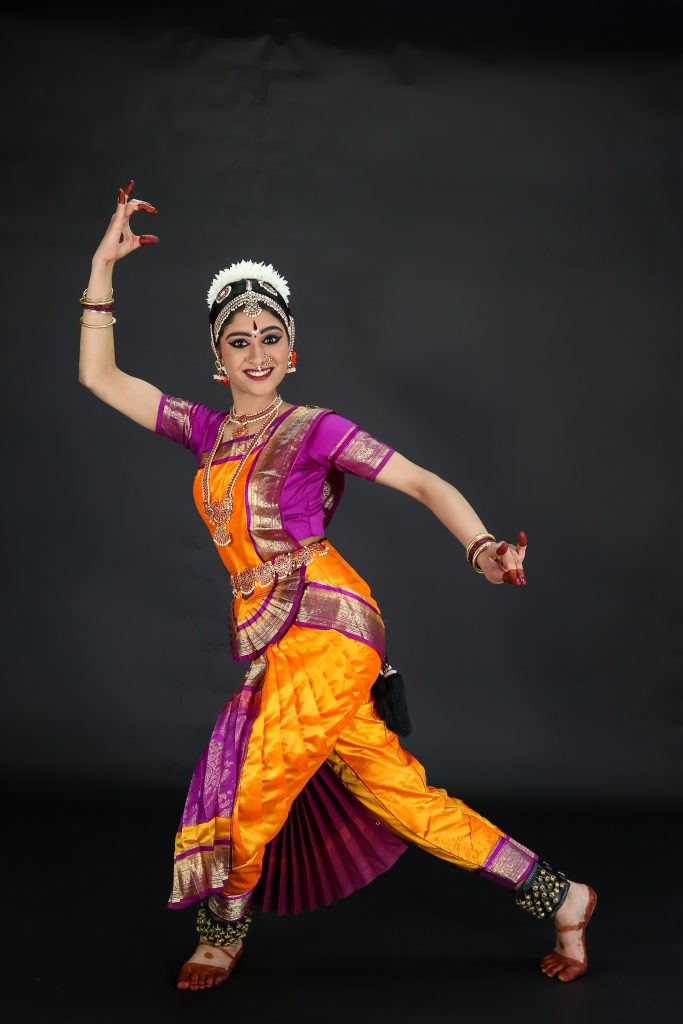
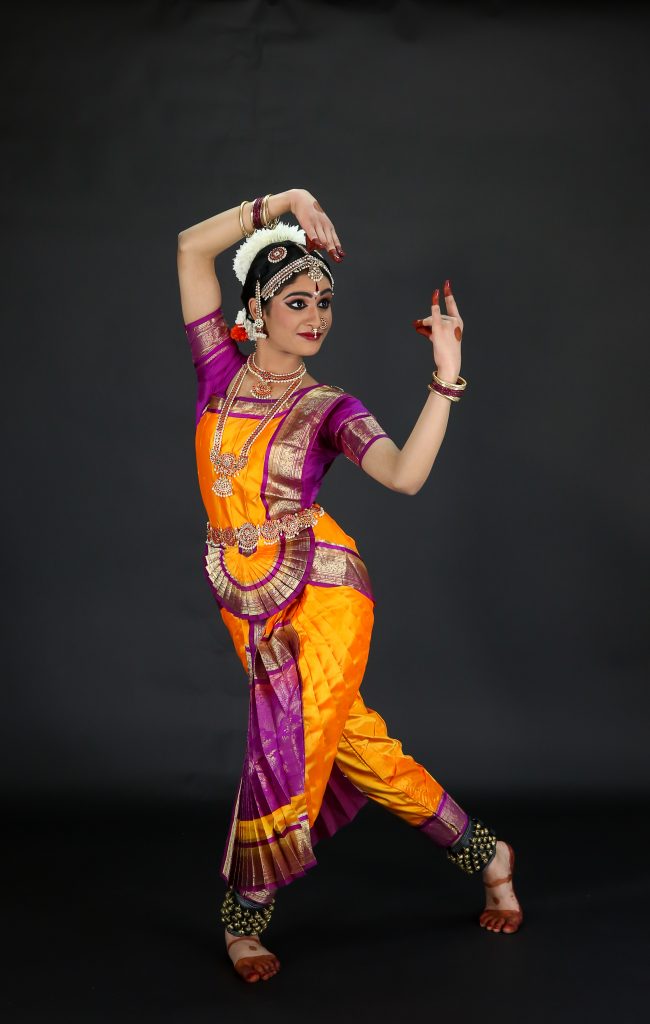
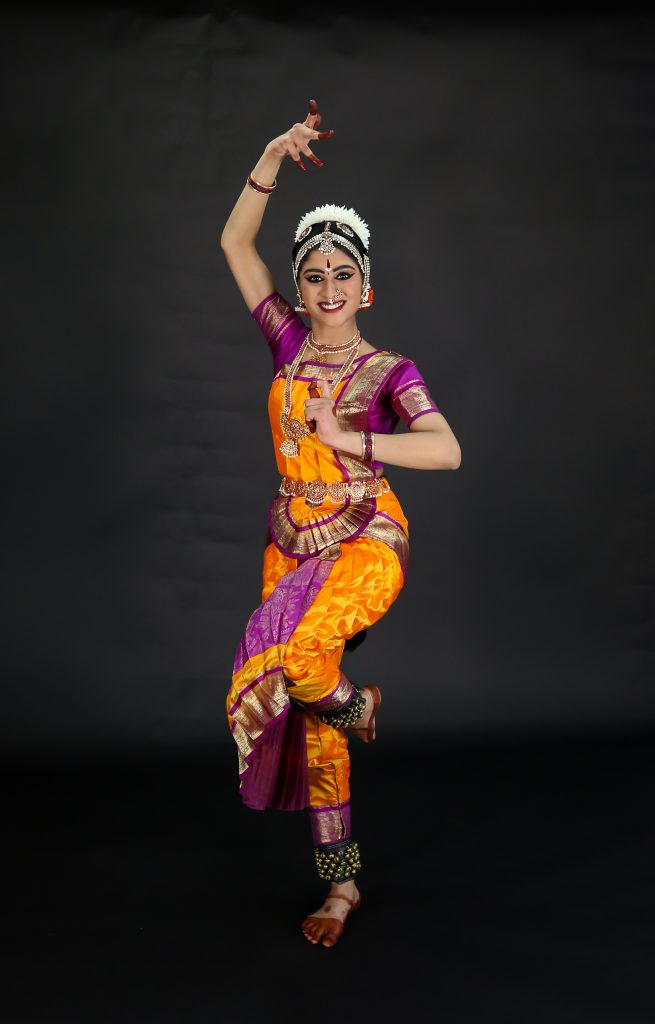
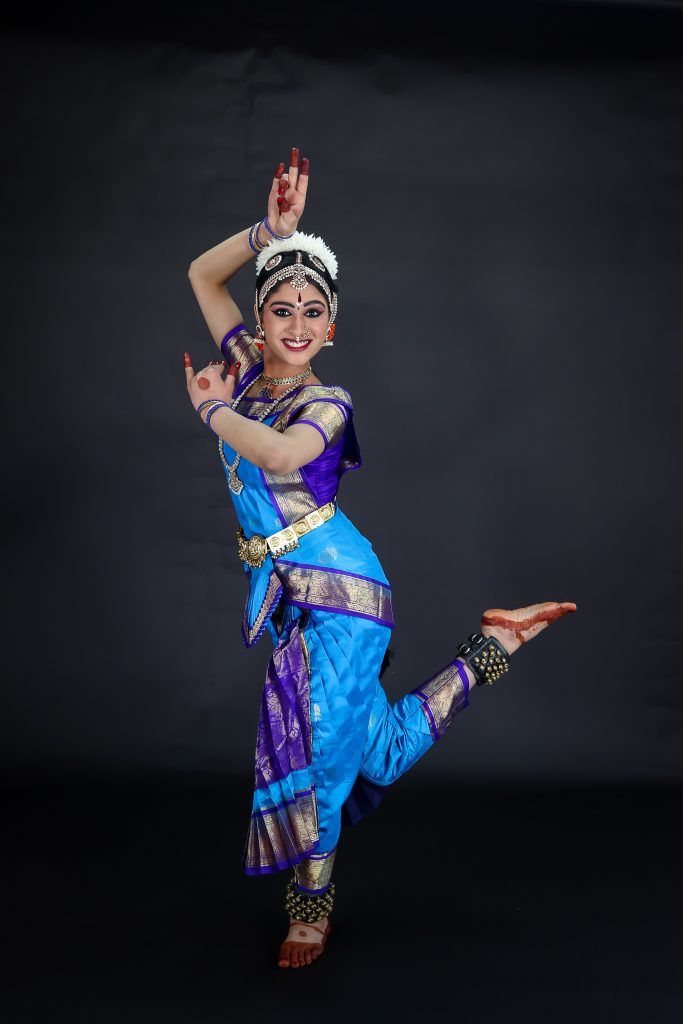
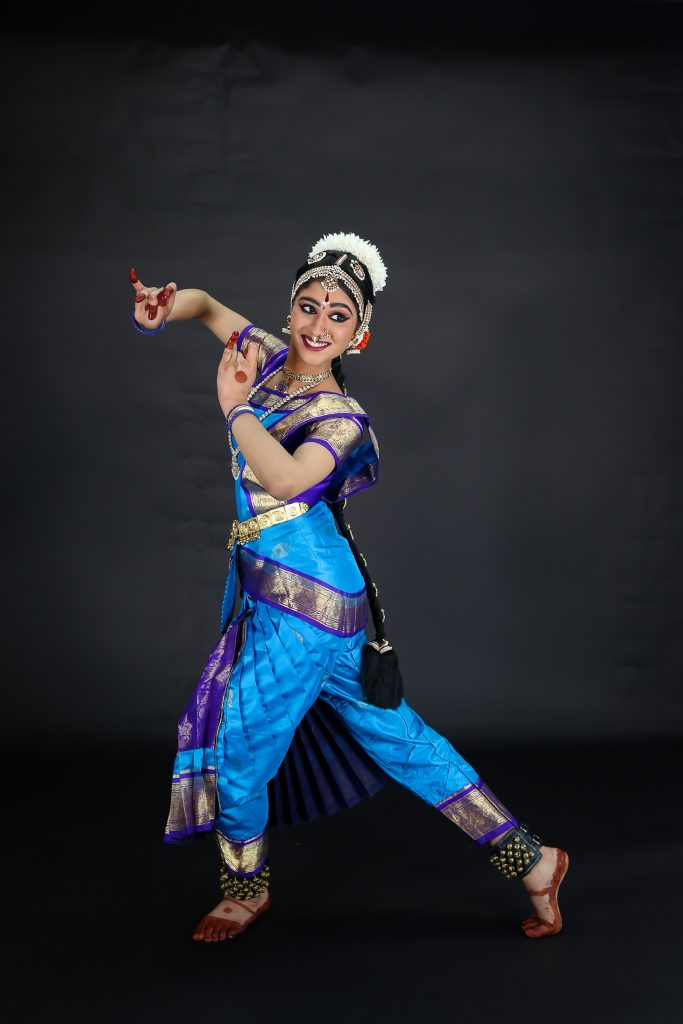
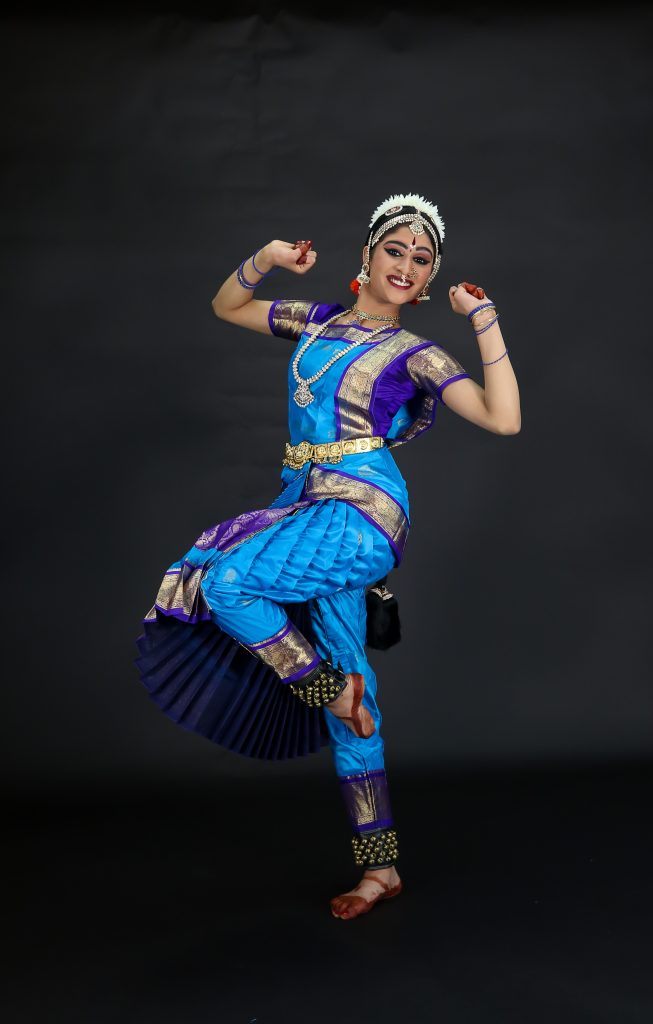
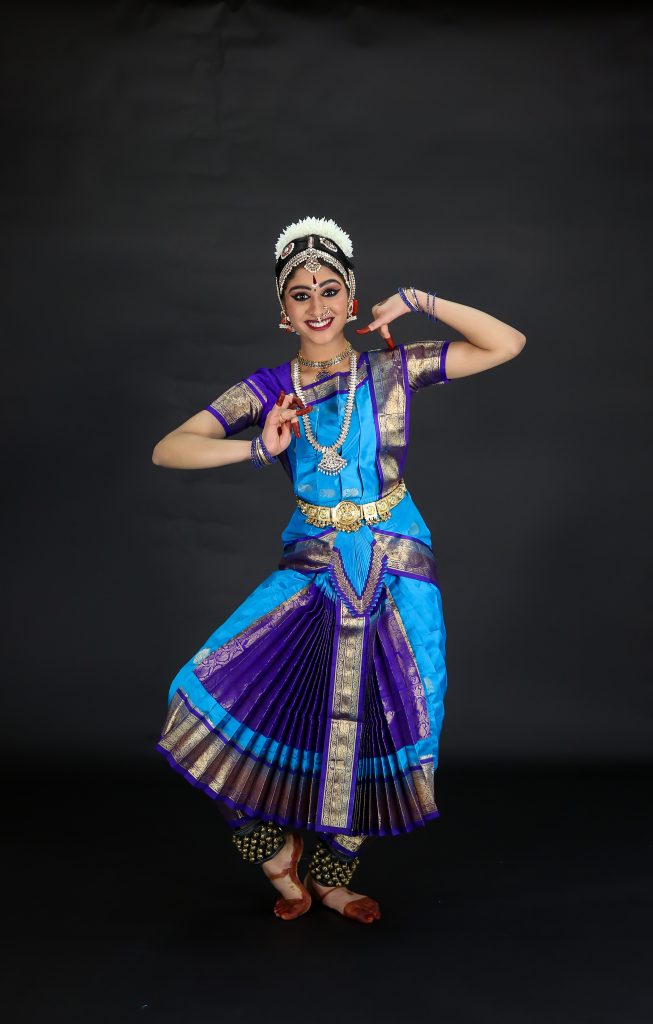
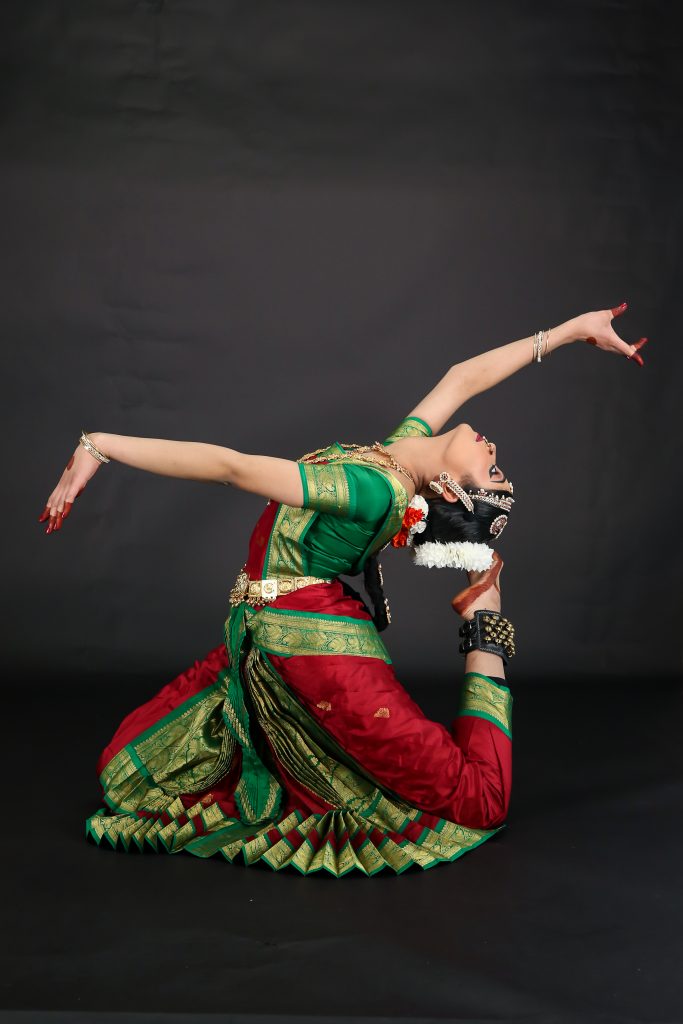
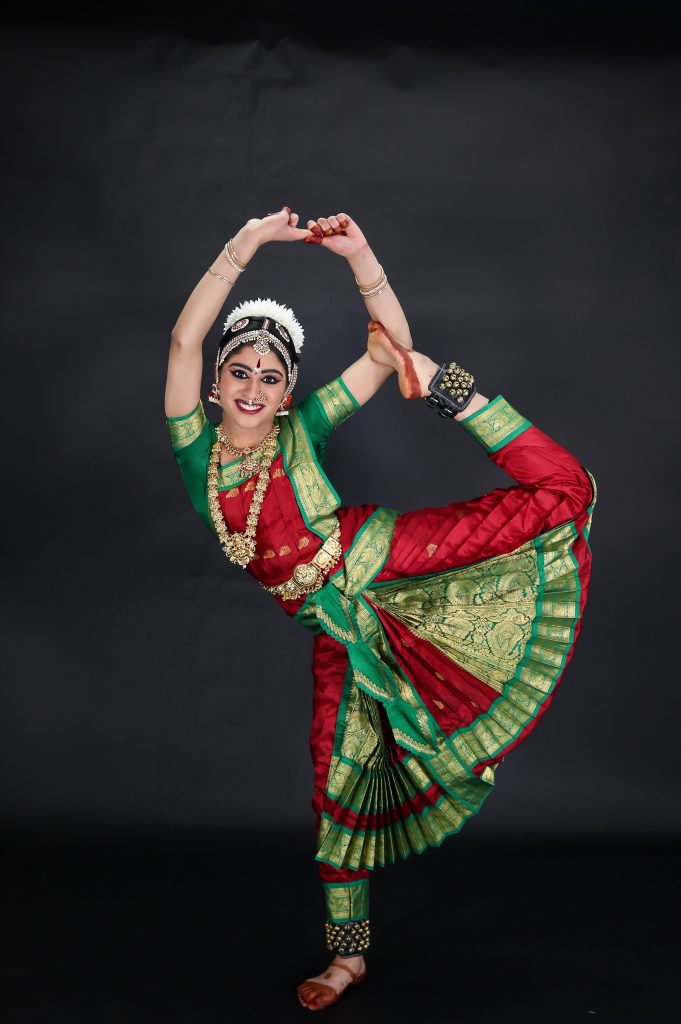
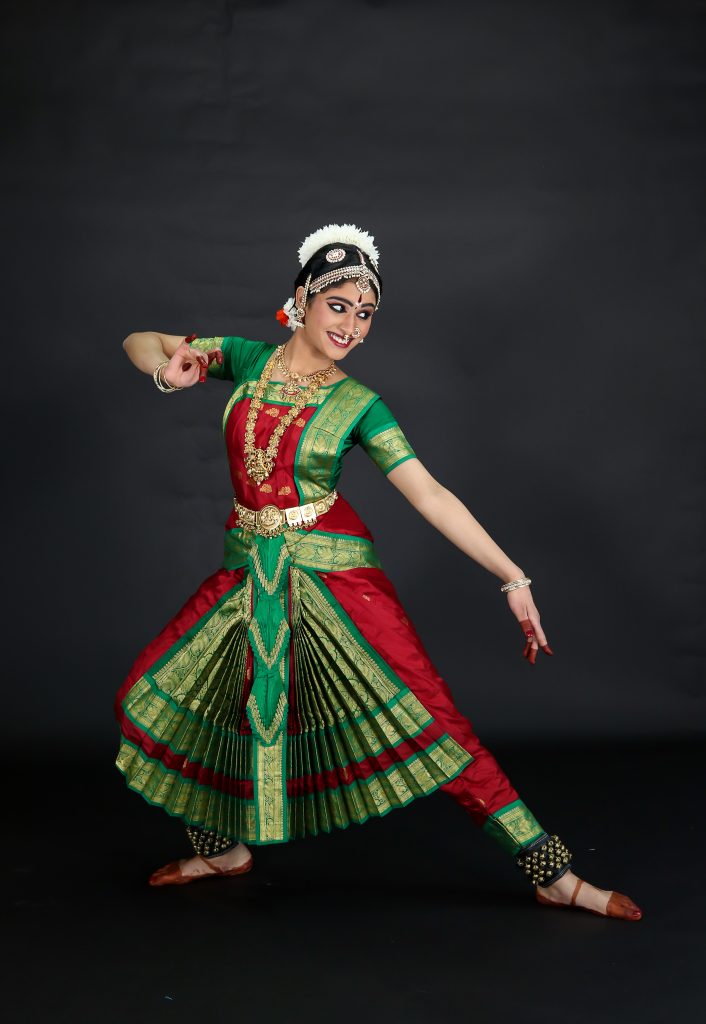
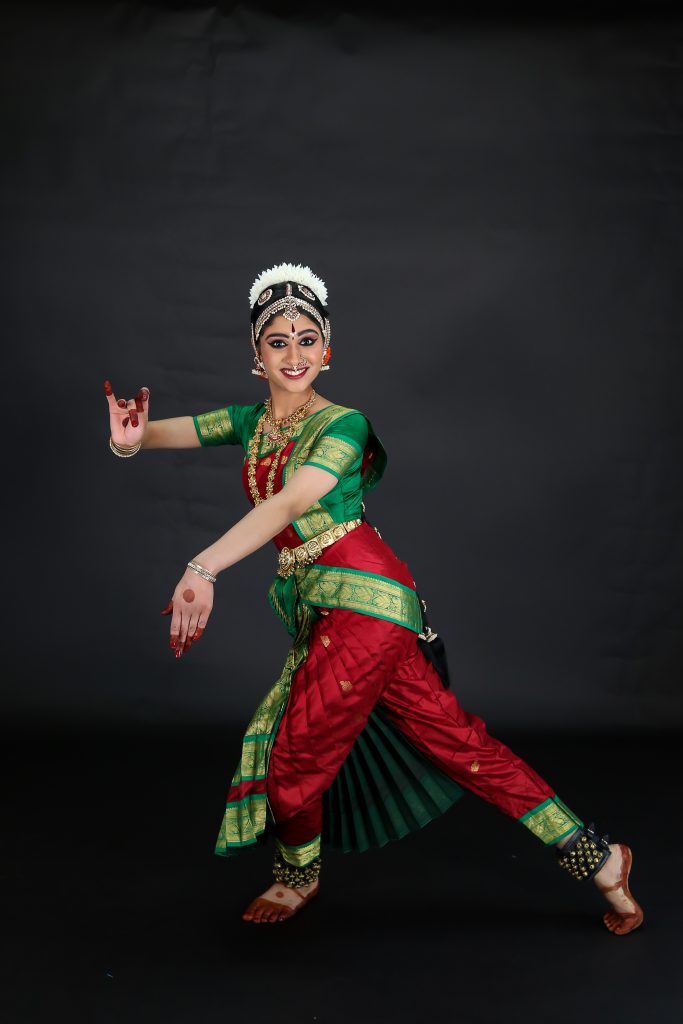
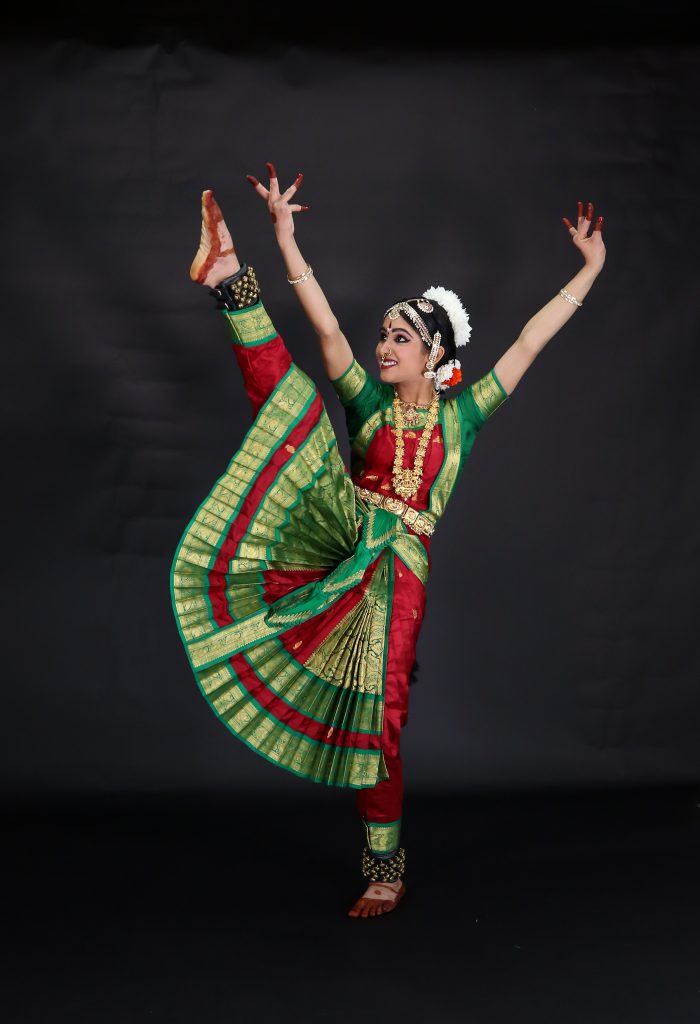
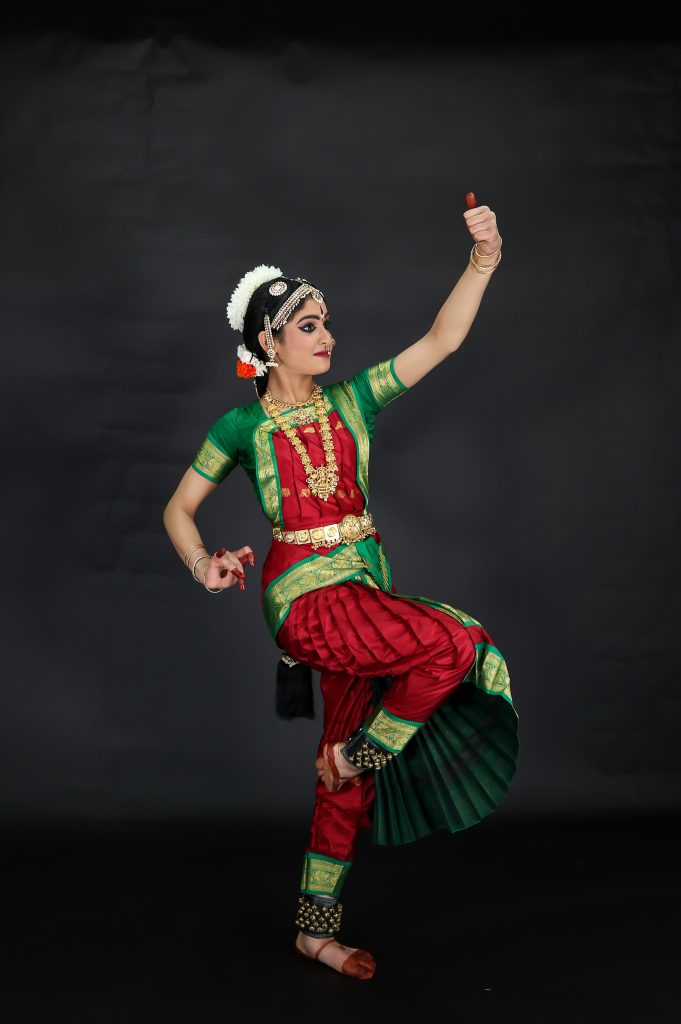
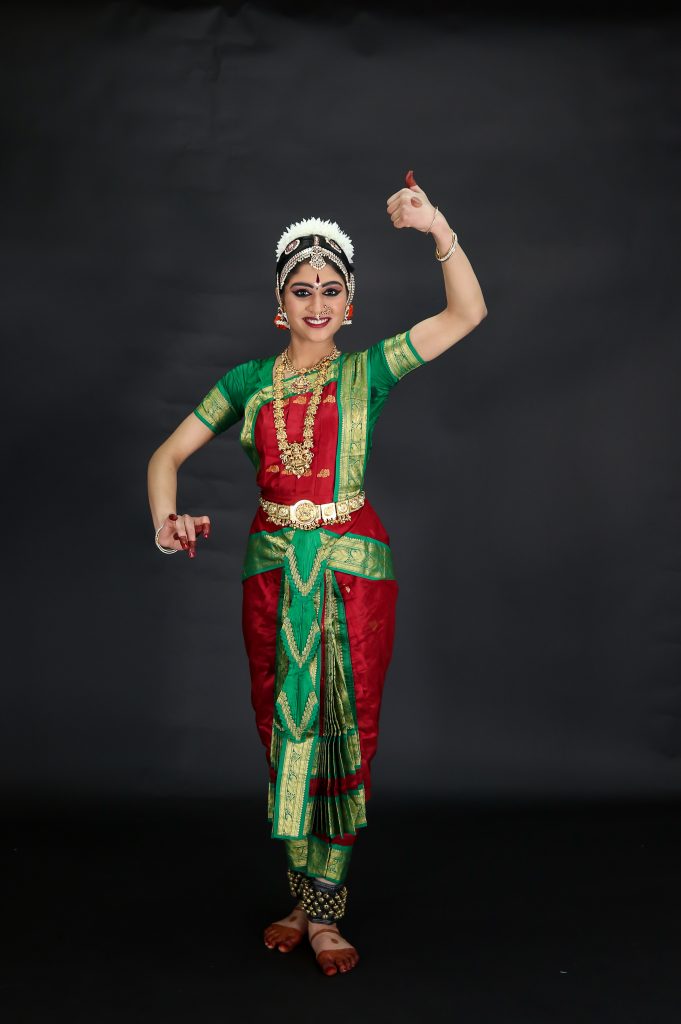
Pushpanjali is the inaugural dance of a Bharatanatyam recital. In this, the dancer makes a floral tribute to the presiding deity and pays respect to the Gurus (teachers), the stage artists, and the audience. With folded hands, the dancer seeks the blessings of one and all as she embarks on her journey into the world of Bharatanatyam. This Pushpanjali is concluded with a prayer to Lord Ganesha to remove all obstacles from the dancer’s path. She starts the program with a customary bow touching the earth and folding her hands.
Ragamalika
Talam: Misra Chapu
Composer: Gangai Muthu Pillai
Chokesar Kautuvam is a devotional dance in praise of Lord Shiva, who is worshipped in the name of Chokesar in the Chokkanathar temple in Madurai. The dance describes the glory of Lord Chokesar as he helps his disciples in times of need. The historic and religious events referred to in this dance are based on a collection of stories written around the 12th century AD. The collection involves sixty-three poets/saints who belong to the Shaivite tradition in Tamil Nadu. While the typical dancing Shiva is depicted with his left leg raised in the air, Chokesar is depicted with his right leg raised. Legend has it that he switched his leg at the request of a devotee.
Kauthuvams have a unique style that begins with a rhythmic recitation of sollukattus/beats for the dance steps, followed by lyrics recited in the same rhythmic meter. This is followed by a rendering of the lyrics in a raaga.
Ragam: Rasikapriya
Talam: Adi
Composer: Lalgudi G. Jayaraman
Jatiswaram: This is a dance with rhythm and grace expressed through intricate and energetic steps. Jatiswaram is a dance attuned to the notes of a pure Carnatic composition.This style of dance highlights the structure and groupings of Jatis. The song is composed of swaras in a melodious raga and is devoid of lyrics. The rendering of the swaras adds beauty and harmony to the dance moves. This is an abstract dance without abhinaya and it brings out the nritta element of Bharatanatyam.
Ragam: Charukesi
Talam: Adi
Composer: Lalgudi G. Jayaraman
Varnam – Innum En Manum: This is the most elaborate item in a Bharatanatyam performance. As a centerpiece in the program, it touches upon every aspect of the dance form, with Nrithya, Nrittha and Natya. In this piece, the dancer depicts a story or elaborates an event with rhythmic movements and expressions. This Varnam portrays the bhakti and wholehearted love towards Lord Krishna. The song and dance depicts the pining of a heart for the affection and attention of the Lord. As with every story or connotation in spirituality, this story is also open to the viewers’ interpretation of the symbolic references. The love for the Lord symbolizes the yearning towards attaining spirituality. Different stories of Lord Krishna, both in his childhood and in his growing years are depicted. Notable portions show his playful nature and his affection towards his childhood friend, Sudama/Kuselar.
Ragamalika
Talamalika
Kavadi Chindu – Medley: This dance is set to a medley of folk songs that describes the various exploits of Lord Muruga. The songs describe the power and strength of the Lord who rides on a peacock. The second part describes the events at Vallimalai where Muruga met his consort, Valli, who was the daughter of a tribal chieftain.The third part goes on to describe the handsome Muruga and his nature and is concluded with the depiction of the six temples in South India, dedicated to Muruga, based on the various mythological events at each location.
Ragam: Sindhu Bairavi
Talam: Adi
Composer: Gopalakrishna Bharati
Thaa Thai Endraduvaar: The divine dance of Lord Shiva is described in this Padam. In this, the dancer shows how Shiva dances with fervor that can rattle all the three worlds and elaborates on the movement of the snakes as the dance progresses. The cosmic dance of Shiva depicts all movements in space and cosmos. Lord Shiva is depicted with hair in matted locks, river flowing from his locks and snakes wound around his neck. Each have a symbolic meaning in helping devotees escape the illusion of the world to attain moksha.
Ragam: Keeravani
Talam: Adi
Composer: Papanasam Sivan
Devi Neeye Thunai: The life of Goddess Meenakshi is elaborated in this dance. The dancer tells the story of the great Yagna conducted by the King of Madurai and how a child arose from the sacred fire. As a princess, she obtains training in all arts and warfare. Excelling in everything she touches, she goes on to conquer the three worlds and finds herself at the footsteps of Kailash, the abode of Lord Shiva. Humbled by the glance of the Lord, she realizes the true nature of God and awaits the marriage prophesied in her childhood. The dance concludes with the marriage of Lord Shiva and Goddess Meenakshi.
Ragam: Hindolam
Talam: Adi
Composer: K. N. Dandayuthapani Pillai
Tillana: Tillana is a fast paced dance that focuses on footwork and artistic poses. The dance explores different tempos and rhythmic structures of dance beats/sollukattus. One of the aspects of Tillana is the jugalbandi, which is the alternate exposition of the rhythms between the orchestra and the dancer followed by a synchronous rendering in a grand finale. A short verse in praise of Lord Shiva is interspersed in the Tillana.
Ragam: Madhyamavathi
Talam: Adi
Composer: Arunachala Kavi
Mangalam – Shri Rama Chandranukku: The concluding dance of a performance is an offering of prayers to the divine. This mangalam is sung in praise of Lord Rama. Describing the Lord with his valor and unmatched character, the dancer shows gratitude to the divine and ends the performance on a good note.